From XL to M
%402x.svg)
I am not a diet expert or a nutritionist.
But in our home, something changed.
My husband used to wear XL. Now he is back to M. I was not much better — I also found myself reaching for size L, and I knew I wanted to move back toward M too.
At first, we started eating more salad because we wanted to control our weight. We are no longer in our twenties. After cancer treatment and early menopause, I also began to understand that my body needed more care than before.
But slowly, salad stopped feeling like diet food.
It became real food.
My husband grew up in Italy, so he was used to simple green salads — lettuce, rocket, or romaine with olive oil and salt.
I grew up in China, where a good dish is often judged by colour, aroma, and taste. In my mind, a bowl of vegetables should not only be healthy. It should also look alive.
So our family salad became something of our own: Italian in its simplicity, Chinese in its love of colour, and personal in the way we mix whatever we have at home.
In our fridge, the two vegetable drawers are now almost always full. If the vegetables are running low, I feel more nervous than when we run out of meat or bread.
A friend once saw a photo of our fridge and said, “So many vegetables?”
I said, “Yes. In our home, we can finish them in two days.”
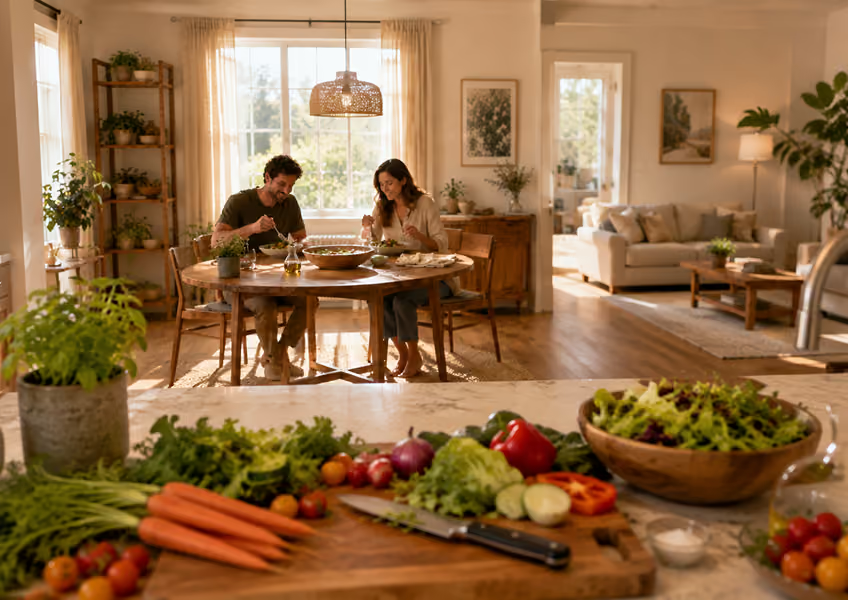
Our salad often starts with a bag of mixed Italian salad from the supermarket — rocket, spinach, and other leaves. But I almost never stop there.
I add tomatoes for their sweet and sour taste. I add carrots for colour and crunch. I add cucumber for freshness. Sometimes I add sweetcorn, beans, canned fish, artichokes, fennel, or whatever we have at home.
To me, a good salad is not boring.
It is colour, smell, and taste all in one bowl.
The green leaves can be a little bitter. Tomatoes are bright and juicy. Carrots are sweet. Cucumbers are crisp. Beans are soft and filling. Fennel has its own perfume. Artichokes make the salad feel more Italian. A little olive oil and salt bring everything together.
Sometimes I add a little soy sauce or vinegar to my own plate, just to change the flavour.
My husband says what he likes most about my salad is the taste. He does not see it as diet food. He calls it real food.
When I asked him to describe our family salad in one word, he said:
“Rich.”
I liked that answer.
Rich in colour. Rich in texture. Rich in taste. Rich in care.
For us, salad is no longer something we eat to punish ourselves. It is one small way we take care of the future version of ourselves.
And now, if I tell my husband, “The vegetables are nearly finished,” he may stop whatever he is doing and rush out to buy more.
That is how essential salad has become in our home.
.svg)



.png)