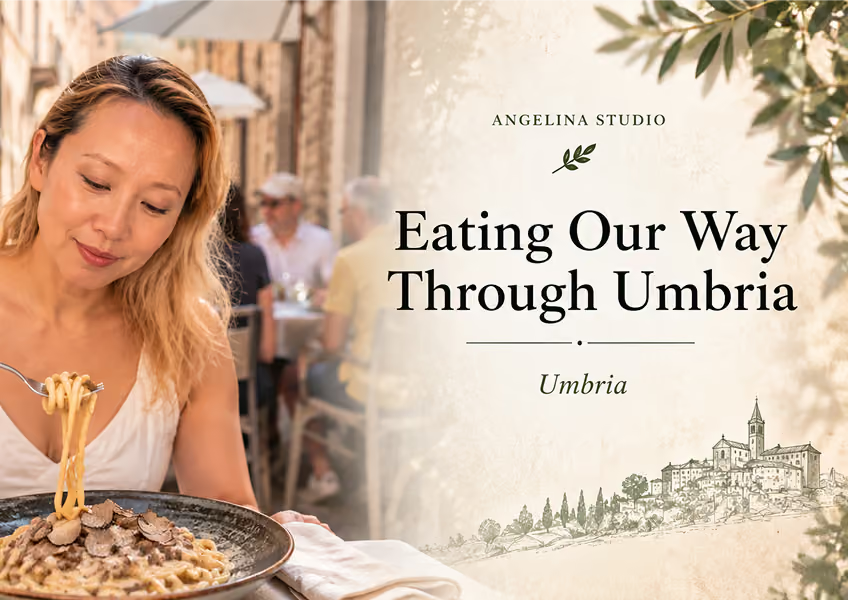
Eating Our Way Through Umbria
%402x.svg)
I thought I knew what eating in Italy would be like. Travelling through Umbria this summer reminded me not to assume too much.
At Faliero Torta de la Maria, near Lake Trasimeno, I saw a few empty tables and thought: perfect, we can eat straight away.
Then we took a number.
Ours was in the 600s. They were still calling the 400s.
My husband suggested going somewhere else. But the charcoal fire had already caught my attention. Meat was cooking over the flames, and more than a hundred people were willing to wait.
I wanted to know why.
So I ordered a beer and stayed. Ninety minutes later, we finally sat down among families sharing freshly made torta, grilled meat and lake fish. It was generous, traditional and remarkably affordable.
In Perugia, I had the opposite surprise.
At Trattoria Oberdan, I was told the wait would be only ten minutes. I couldn’t believe it. In my mind, Italians sat down for long meals — primo, secondo, contorno, then coffee.
But people around me were doing something much simpler. Some ordered just one plate of pasta. Two young men had a pasta each, finished with coffee and left.
The tradition was still there. The rhythm was changing.
Later, at a shopping centre, I spotted a poke counter. I assumed it might mainly appeal to international or Asian customers.
Instead, a young Italian woman stood at the counter, confidently starting with riso bianco before choosing her toppings. She clearly knew exactly how it worked.
Even buying wine surprised me.
In a specialist wine shop in Spoleto, I expected to spend ages looking at bottles. There were plenty of good wines between about €8 and €40. I simply told the owner I wanted an Umbrian wine as a gift and gave him my budget.
Within a minute, he had chosen a popular Montefalco Sagrantino for me.
By the end of the trip, I realised that what had surprised me was not that Italian food traditions were disappearing. They weren’t.
The charcoal grills, pasta, local wines and family tables were still everywhere. But alongside them were quicker meals, international flavours and new ways of eating.
Italy had not left its food traditions behind. It had simply made more room at the table.
.svg)



.png)